Manage at scale.
From Stardust to AEM.
Web publishing changed under us.
The old deal
Reuse everything. Build nothing new.
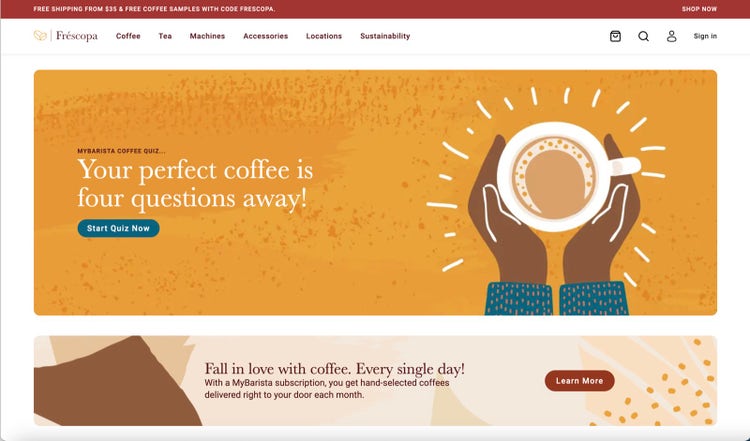
Implementation partners shipped a library — Hero, Card Grid, Accordion, Tabs — and marketers composed pages from the shelf. Sites got fast by getting boring. It worked.
What broke it
The cost of uniqueness collapsed.
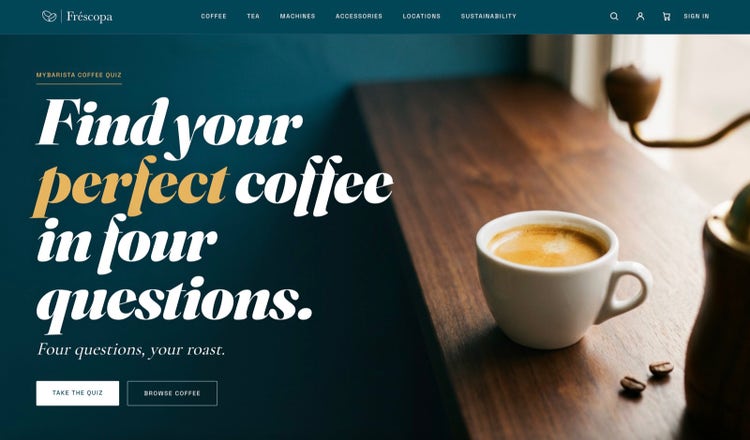
AI tools now generate bespoke, production-quality HTML — scroll-driven motion, cinematic transitions, three-week designs in an hour — from a prompt and a brand surface. Designers know how to drive them.
Now
The library was a workaround.
Every page can be its own page again — provided the brand keeps the rules. The library's job moves up a level: from shape to guardrails.
More than a renderer. An experience system.
Manage at scale
Every market, every campaign, one surface.
Authors edit in-place with Universal Editor. Drafts, scheduling, translations, A/B variants, market overrides — all in one place. Roll the same Stardust artifact across regions, products, and seasons without rebuilds.
Brand visibility
Optimized for the AI-facing web.
LLMs synthesize brands from what they can read. Edge Delivery's clean, semantic, structured markup — exactly what Stardust outputs — is what Google AI Mode, Claude, and ChatGPT extract correctly. Your brand survives the synth as you mean it.
Performance, by construction
Top-decile Core Web Vitals.
100/100 Lighthouse scores aren't aspirational on Edge Delivery — they're the default. Static HTML, edge-cached globally, no client-side framework rehydration. SEO and search ranking follow.
Meet stardust:deploy.
From static HTML to a live AEM experience.
Generate
stardust:uplift
From a live URL: capture the brand and generate the redesign as deployable, polished static HTML.
Convert
stardust:deploy
Turn each section into an authorable EDS block; per-section CSS becomes block CSS. Content stays editable by authors.
Publish
AEM Edge Delivery
File-based, edge-served. 100/100 Core Web Vitals, Universal Editor wired, AI-friendly markup.
Two commands. No development in between.
- Generate the redesign.
/stardust:uplift <URL>— Stardust crawls the live site, captures the brand surface, and generates three differentiated variants in one run. Approve the one that fits. - Convert and ship to AEM.
/stardust:deploy— stardust:deploy turns the chosen variant into EDS blocks and content pages and pushes them into your AEM Edge Delivery project. Run/stardust:diffto confirm the build matches the prototype, then publish.